

Wilmington water at a glance
- Water utility
- Cape Fear Public Utility Authority (CFPUA)
- Source
- The Cape Fear River, treated at the Sweeney plant, serves about 80% of CFPUA customers (CFPUA)
- PFAS treatment
- Granular activated carbon filters at Sweeney since October 2022; CFPUA reports PFAS at or near non-detectable levels
- Disinfection
- Chlorine, after ozone and UV at the Sweeney plant (CFPUA 2025 water quality report)
- Hardness
- About 50 ppm on average in 2025, which is soft (CFPUA)
- Private wells
- Tested by New Hanover County Environmental Health; PFAS sampling available for eligible wells
Which utility serves your home?
Around Wilmington, water comes from several utilities:
- Cape Fear Public Utility Authority (CFPUA) serves Wilmington and much of New Hanover County.
- Brunswick County Public Utilities serves much of Brunswick County.
- H2GO serves parts of Leland and Belville.
- Pender County Utilities serves parts of Pender County, including the Hampstead area.
Check your water bill to see which one serves you. Each publishes its own annual water quality report, and our test measures what actually reaches your tap.
Where Wilmington's city water comes from
- SourceThe Cape Fear River (about 80% of CFPUA customers)
- TreatmentCFPUA Sweeney plant, with granular activated carbon filters since October 2022
- DisinfectionChlorine, after ozone and UV
- Your tapThen your own pipes and water heater, which our free test checks
Private wells and PFAS in the Lower Cape Fear
Reverse osmosis remains a sensible extra barrier for homes on private wells in the Lower Cape Fear. The state found Chemours responsible for PFAS in groundwater and ordered it to sample private wells in New Hanover, Brunswick, Pender and Columbus counties (NC DEQ).
PFAS and Wilmington water
Since October 2022, CFPUA has treated Sweeney plant water with granular activated carbon and reports PFAS at or near non-detectable levels (CFPUA). RO adds a second barrier at your kitchen tap.
What reverse osmosis reduces
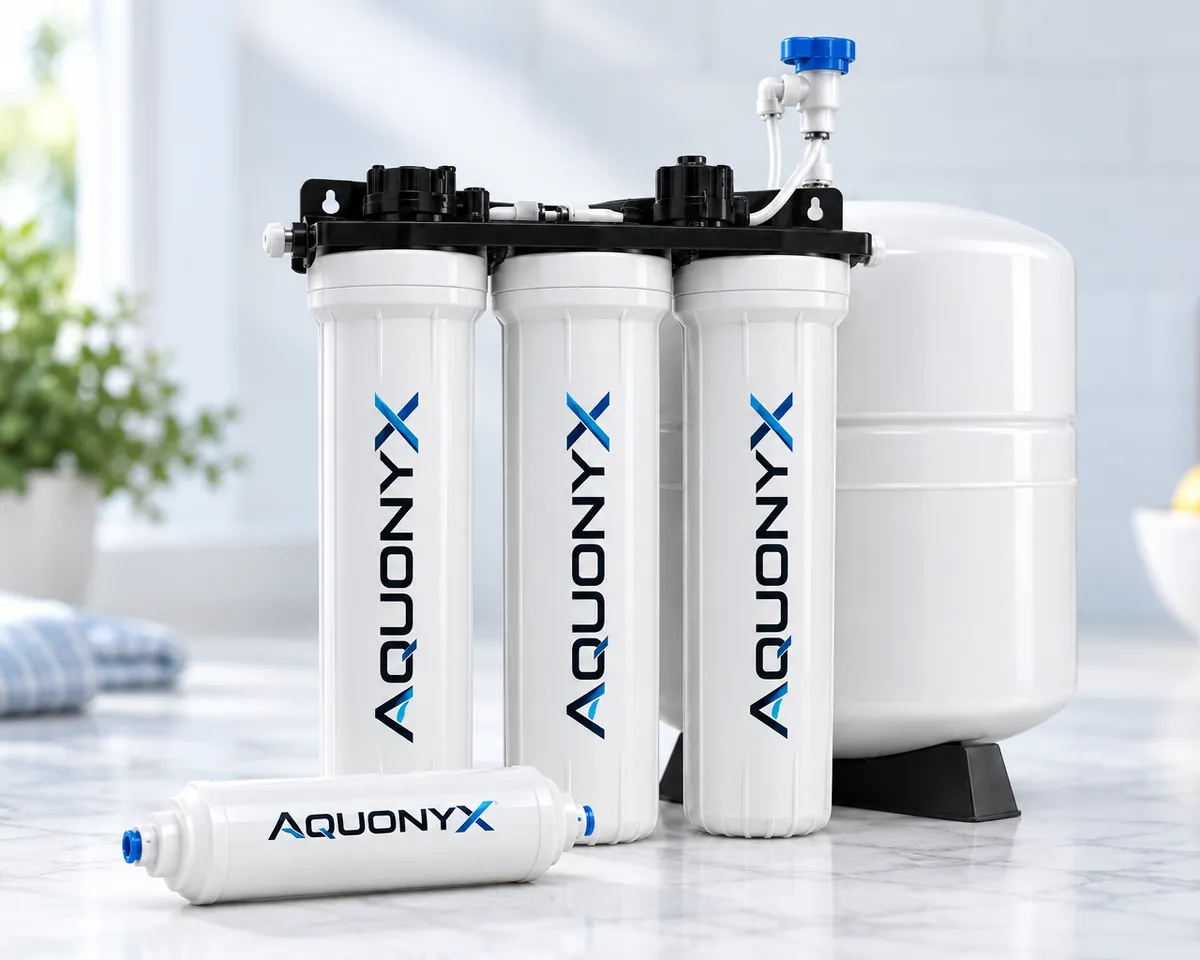
Certified systems reduce dissolved solids, lead, many PFAS compounds, nitrates and arsenic, and their carbon stages take out chlorine or chloramine taste. Look for certification to NSF/ANSI 58 for the contaminants you care about. How reverse osmosis works.
What happens at your free test
Your free test measures hardness, chlorine or chloramine, iron, pH and total dissolved solids at your tap, and you keep the written report. We recommend a reverse osmosis system only if your results call for it. How the free test works.
Where we work around Wilmington
We test homes across Wilmington, Leland, Carolina Beach, Wrightsville Beach and Hampstead.
Sources
- CFPUA: Sweeney Treatment Enhancements Project (GAC filters)
- CFPUA: annual drinking water quality report
- New Hanover County: drinking water safety and private wells
- NC DEQ: PFAS well sampling for Lower Cape Fear residents
Frequently asked questions
Does reverse osmosis remove GenX?
Reverse osmosis is among the most effective home treatments for PFAS compounds such as GenX. Check the system's certification for the specific compounds it was tested against.
Does reverse osmosis remove PFAS?
Reverse osmosis is one of the most effective home treatments for PFAS. Certified systems list which PFAS they were tested to reduce.
Where does the system go?
Under the kitchen sink, with its own faucet. It can also feed a refrigerator or ice maker.